Why Unfinished Tasks Won't Leave You Alone
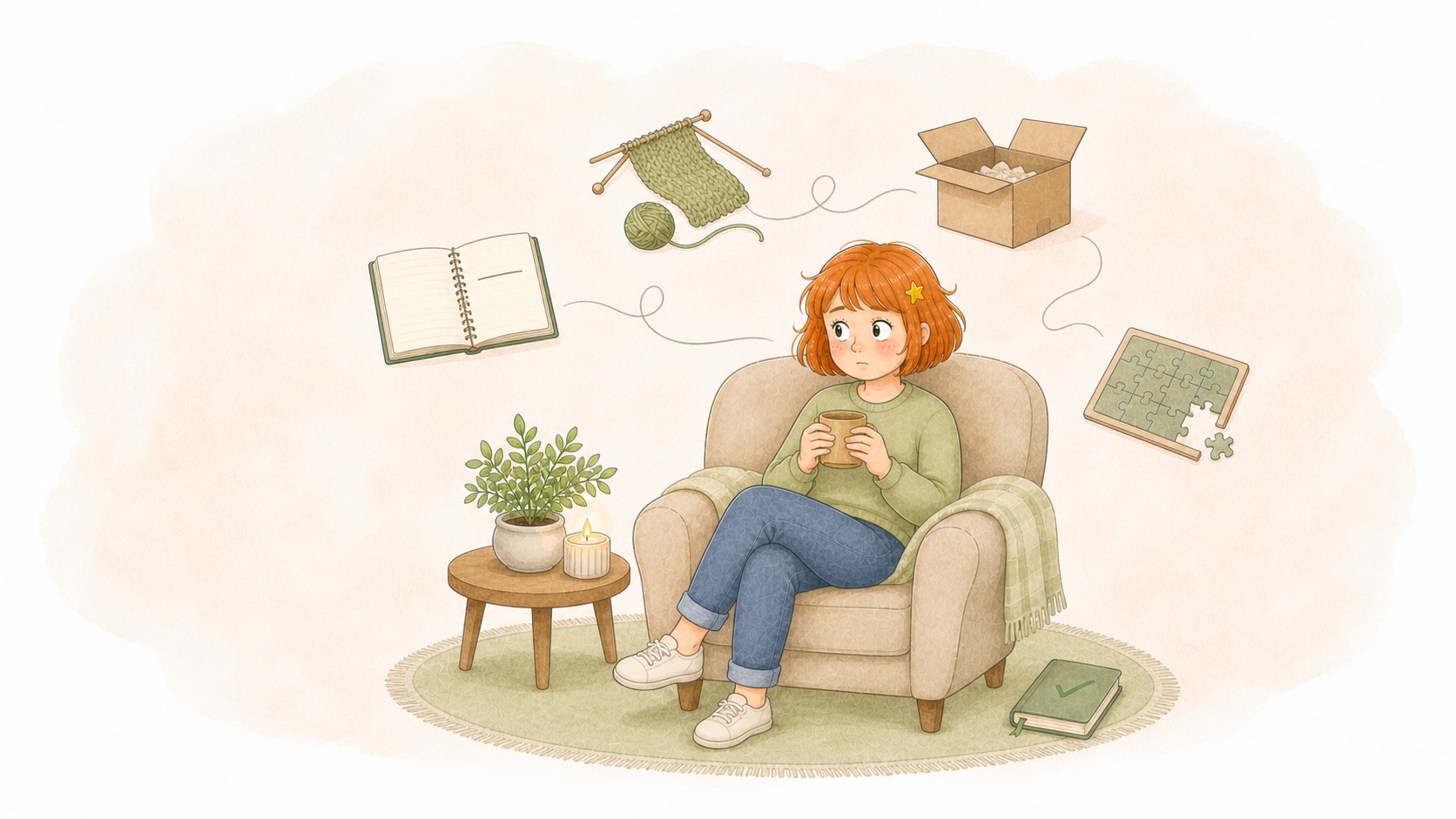
You forget what you've done. But you remember what you haven't.
That's not a bug. That's the Zeigarnik effect.
1. Where It Comes From
In 1927 Bluma Zeigarnik noticed something. Waiters remembered open orders. The moment a dish hit the table, they forgot it. Didn't even remember taking it.
She ran an experiment. Gave people tasks, interrupted some in the middle, let others finish. The unfinished ones took up twice as much memory as the finished ones.
Formal name: the Zeigarnik effect. Informal: an unclosed gestalt.
2. Why It Works
An unfinished action creates mental tension. The brain won't let go until it puts a full stop. This isn't procrastination. It's cognitive load.
David Burns called these "open loops." Every unclosed task sits in working memory. Ten open loops, ten spent resources. Big or small, doesn't matter.
Hence the paradox: small unfinished things drain you as much as big ones. Finish the email, make the call, reply. Every little thing, as long as it hangs open.
3. How It Gets in the Way
With too many tasks, the brain spends energy on holding, not solving. That's cognitive load. The more "don't forget," the less left for the actual work.
The result: you can't focus, you forget things, you feel like you're failing even though there aren't that many tasks. The problem isn't volume. It's that nothing is closed.
4. How to Use It
First trick: write it down. Don't hold it in your head. Paper, a note, a task app. Once a task is written, the brain can let go. The loop closes.
This is the core of GTD, Getting Things Done. David Allen's point: the brain is for storing, a notebook is for tracking. Don't hold in your head what you can offload.
Second trick: start. Not finish, start. The Zeigarnik effect works from the moment of starting. If a task is touched at all, it's already in motion. The brain considers it moving toward closure.
Third: small steps. Not "write the book," open the document and write the title. That closes the loop enough to free the resource.
What to Do
Write down every unfinished thing floating in your head. All ten. All twenty. The list should live outside, on paper or in an app. After that, the brain starts letting go.
Close two or three small ones today. Not because those specific ones matter. Because every closed task releases tension. The brain gets the signal: "I can close things."
Start big tasks with a first step. Any step. Don't plan it all out. Just touch it.
ForgeSelf shows your unfinished tasks and lets you mark what's done. One reason it works is the closure effect.
Sources: Bluma Zeigarnik, "Zeigarnik effect," 1927. David Allen, "Getting Things Done," 2001. David Burns, "Feeling Good: The New Mood Therapy," 1980.
Content is created with AI based on scientific papers on hand-picked topics. I would be glad to get help from a human editor — send your CV to support@forgeself.com