Why the Right Moment Never Comes
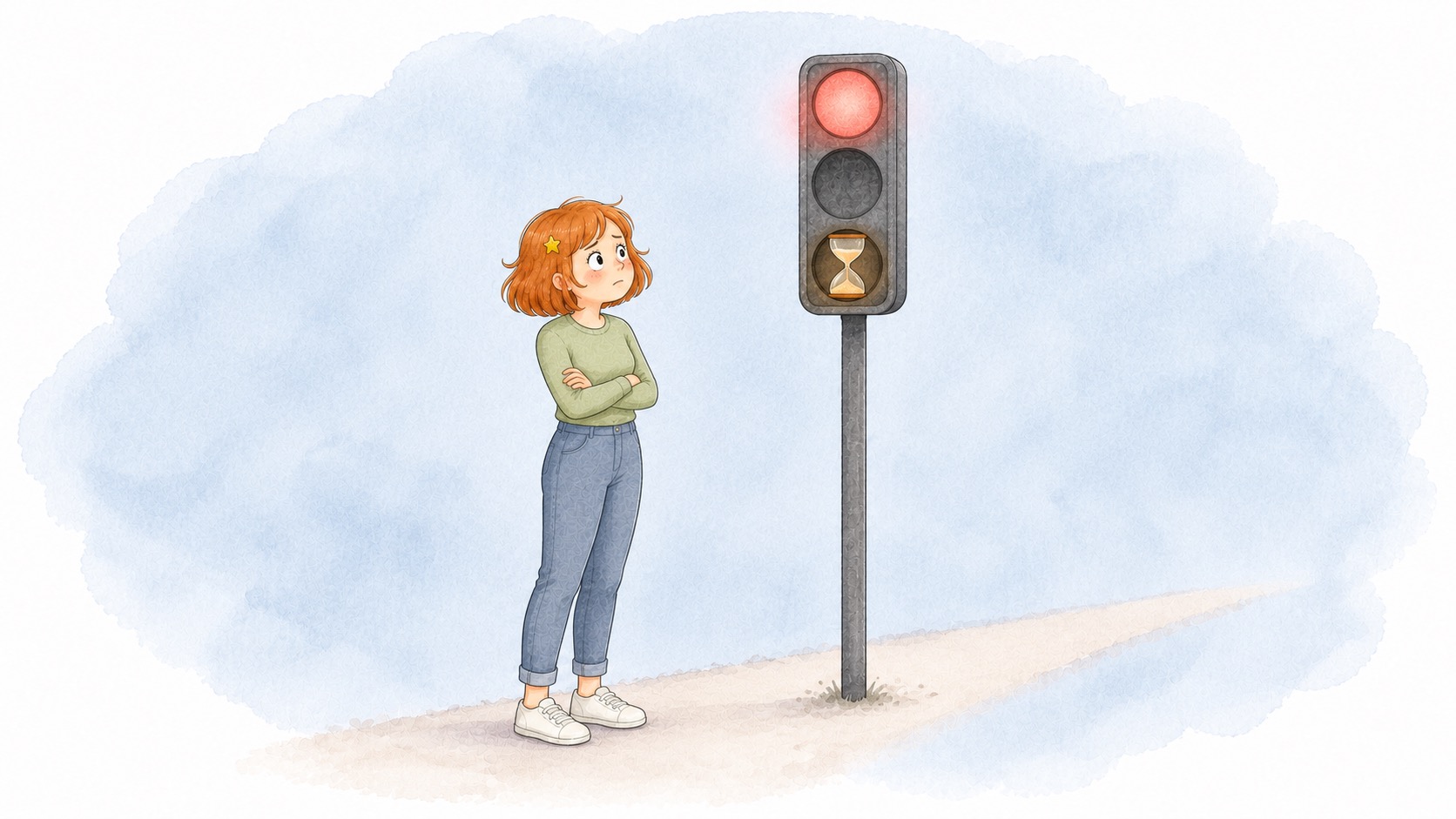
A friend of mine wants to start his own business. For five years now. Every time I ask how it's going, he says: "I'll find the perfect time and launch." Meanwhile he has a stable job, enough money, a supportive family. Objectively, the time is fine. But he's waiting for something. What exactly, he can't explain.
Familiar?
The perfect moment is an illusion. It doesn't exist. Not in the sense that you lack the conditions. In the sense that the moment when you finally feel ready never comes. Study all you want, but until you do it, you won't know.
So why do we believe the moment exists?
First reason: waiting feels safe. Doing nothing means making no mistakes. Childish logic, but it works. The brain doesn't want unpleasant surprises, and every action brings them. So it suggests waiting. That's not caution. That's fear.
Second: confusion between preparation and action. You open ten tabs, read articles, watch videos. It looks like work. But if a month later you're still on the tabs, you're not preparing. You're reading.
Third: the idea that information reduces risk. It doesn't. The risk stays the same. You just know more. But knowledge without action is just trivia. You can know everything about the SaaS market and still not be able to sell. Different skills.
Fourth: the feeling that "now it's the moment." Everyone who's started knows this feeling. At the start, it's rarely "now it's definitely right." Usually there are doubts, fears, other things to do. And yet you start. Because you understand: there won't be a moment without fear.
There's a good question that helps. Ask yourself: what will change in a month if you keep waiting? Specifically. Not "I'll know more," exactly what. If there's no answer, you're not waiting. You're frozen in place.
In a month you'll know as much as you know now. That's the answer.
What to Do
One: set a real start date. Two weeks out, not a month. Not "when it's ready," "when it's acceptable." Two different criteria. The first has no boundary. The second does.
Two: split the decision. First: do we start or not. Second: what we do next. The first can be made with incomplete information. The second needs the first.
Three: look at how much time you've spent on "preparation." If it's over three months, you're not preparing. You're playing at preparation. It's an expensive hobby, because the time goes and doesn't come back.
Four: do something small today. Not thinking or studying. A small action in the real world. It doesn't have to be right. It has to exist.
The perfect moment won't come. Nobody prepared it.
ForgeSelf shows how much time went into preparation versus real steps. Useful information, especially if you discover you've been preparing for six months.
Sources: James Clear, "Atomic Habits," 2018. Cal Newport, "Deep Work," 2016. Scott Young, study on deliberate practice and skill acquisition, 2023.
Content is created with AI based on scientific papers on hand-picked topics. I would be glad to get help from a human editor — send your CV to support@forgeself.com