Start Bad or Don't Start Perfect: Why Perfectionism Costs More Than a Rough Start
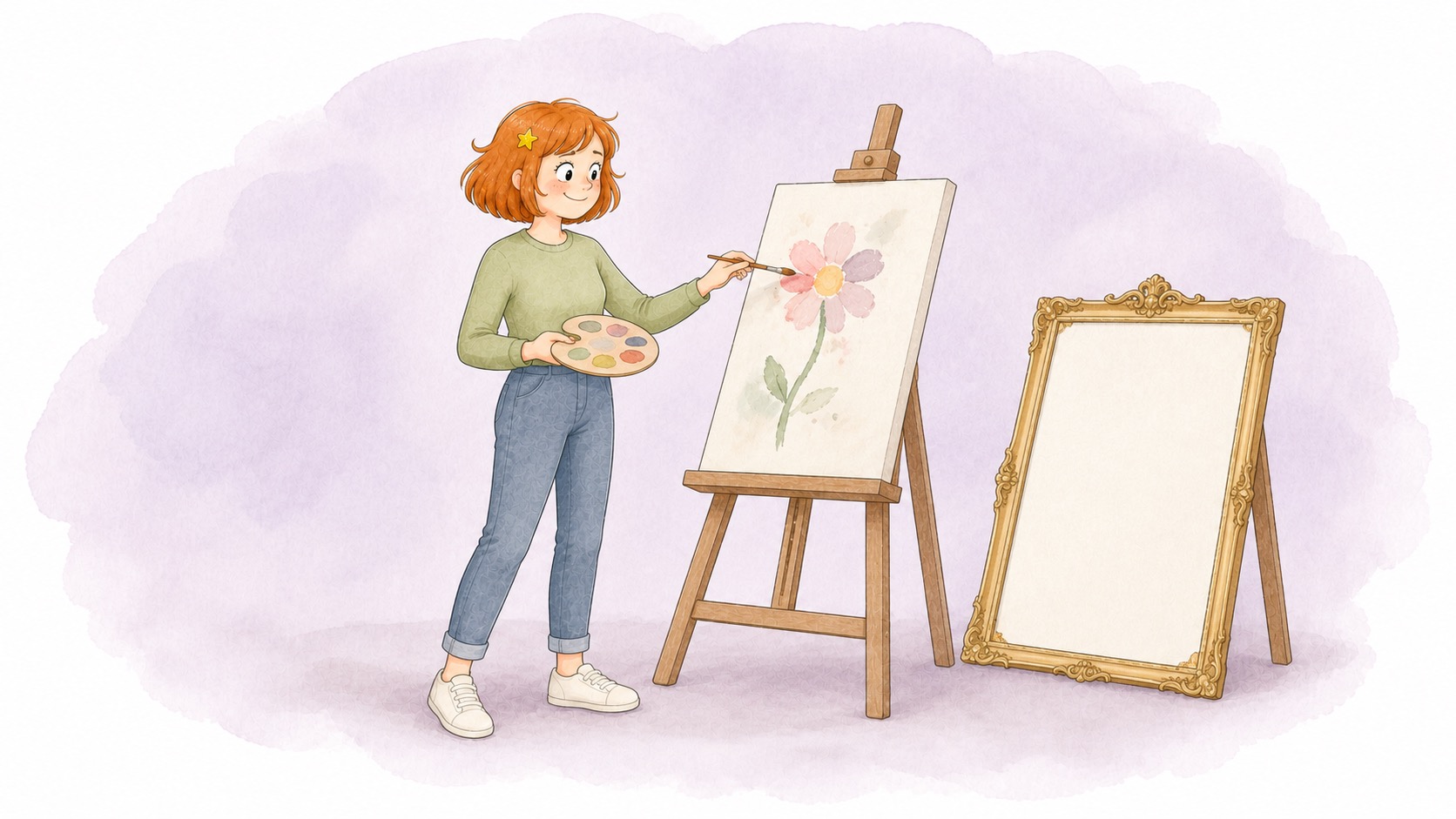
A friend rewrote the introduction to her thesis four times. She said she wanted it to be right. Fifteen months into waiting, she realized the thesis had never actually started, and the deadline was coming. She rewrote it in a weekend and got a C. The professor noticed no difference.
This isn't a story about laziness. It's about perfectionism dressed up as conscientiousness.
What Perfectionism Actually Does
Perfectionism doesn't mean high standards. High standards mean you want to do it well. Perfectionism means you can't start until it's perfect. Big difference.
For the first twenty years, psychologists treated it as a positive trait. Then they looked at the data. Perfectionism is linked to depression, anxiety, and procrastination, and the higher the score, the worse the outcomes. Not because perfectionists do bad work. Because they often do nothing.
Ashley Goodman, one of the leading researchers on perfectionism, describes it as a shield. Not against outside judgment, against the possibility of a negative result. If you never start, you can never fail. The logic holds, except it rules out the positive result too.
Why a Rough Start Is Mathematically Better
Take any skill, any task. Start badly. Then count.
Roughly speaking, the first pass gives you information you didn't have. You learn which parts are harder than you thought. Which assumptions were wrong. What irritates you after three days, once the novelty wears off. That data is priceless, and you only get it through action.
Pierre Lêvek, who studied startups, put it bluntly: early on, the unknown is far more dangerous than the known risk. A rough first prototype, a shaky presentation, raw text, none of it is failure. It's probing the ground. You learn where it's solid and where you fall through.
Say you start badly and a month later realize you picked the wrong audience. Or that the product solves the wrong problem. Is that a month lost? No. It's a month that gave you information which, without action, would have cost you a year.
Without action, you keep "improving the plan," which is built on assumptions. The longer you improve it, the more attached you get to those assumptions. Psychologists call this escalation of commitment: the more you've invested, the harder it is to walk away, even when the data says you should.
Three Signs You're Under Perfectionism
First indicator: the task can only start under special conditions. "I'll write when the mood is right." "I'll start training once I buy the perfect program." If the condition for starting keeps shifting, it's not preparation.
Second indicator: the "done" bar keeps moving. You made the first version. It's rough. You know what to fix. You fixed it. Now you see other problems. Two hours later the new version is worse than the first, because you overdid it. That's classic paralysis from refining details that don't matter at this stage.
Third indicator: you remember wanting to start a long time ago. A year of thinking about the course, the project, the move. If the thought of the unrealized thing produces quiet irritation rather than constructive concern, it's time to admit perfectionism has already stolen your time.
What Actually Helps
Not "just start." That doesn't work as advice. The brain resists.
What works: set the first threshold so low you can't miss it. Not "write the introduction," but "open the document and write one sentence." Not "make the first call," but "dial the number and hang up if it's scary." Small and concrete.
Robin Hanson, the economist, describes it as "keep score on your bets." Don't try to win the argument. Make small bets, gather data, update. In a month you have a real picture. In a year, experience you can't get any other way.
Also works: set a time when the project will be "70% done." Not 100. Seventy. That's enough to test the main hypothesis. The remaining 30% is refinement, not the foundation. Build the foundation, not the roof.
What to Do
Look at the main project you keep putting off. Ask yourself one question: if I'd started it six months ago, what one thing would I already know that I don't know now? Not a list. One thing.
If there's no answer, maybe the project isn't needed. If there is, start from there. Not from the beginning. From the most useful thing you already know but haven't tested.
Perfectionism doesn't protect you from a bad result. It protects you from any result at all. A rough first pass isn't failure. It's a starting point. Without it, there's nowhere to move.
ForgeSelf tracks not just tasks, but what you learned on the way to them. But starting to move is always about you, not the tool.
Sources: Ashley Goodman, Randy Paterson, "When Perfect Isn't Good Enough," 2009. Pierre Y. Lêvek, "The Art of Doing Science and Engineering," 2020. John Herrman, "The Wrong Abstraction," 2019.
Content is created with AI based on scientific papers on hand-picked topics. I would be glad to get help from a human editor — send your CV to support@forgeself.com