Ideas Have an Expiration Date: Why Motivation Dies Without Action
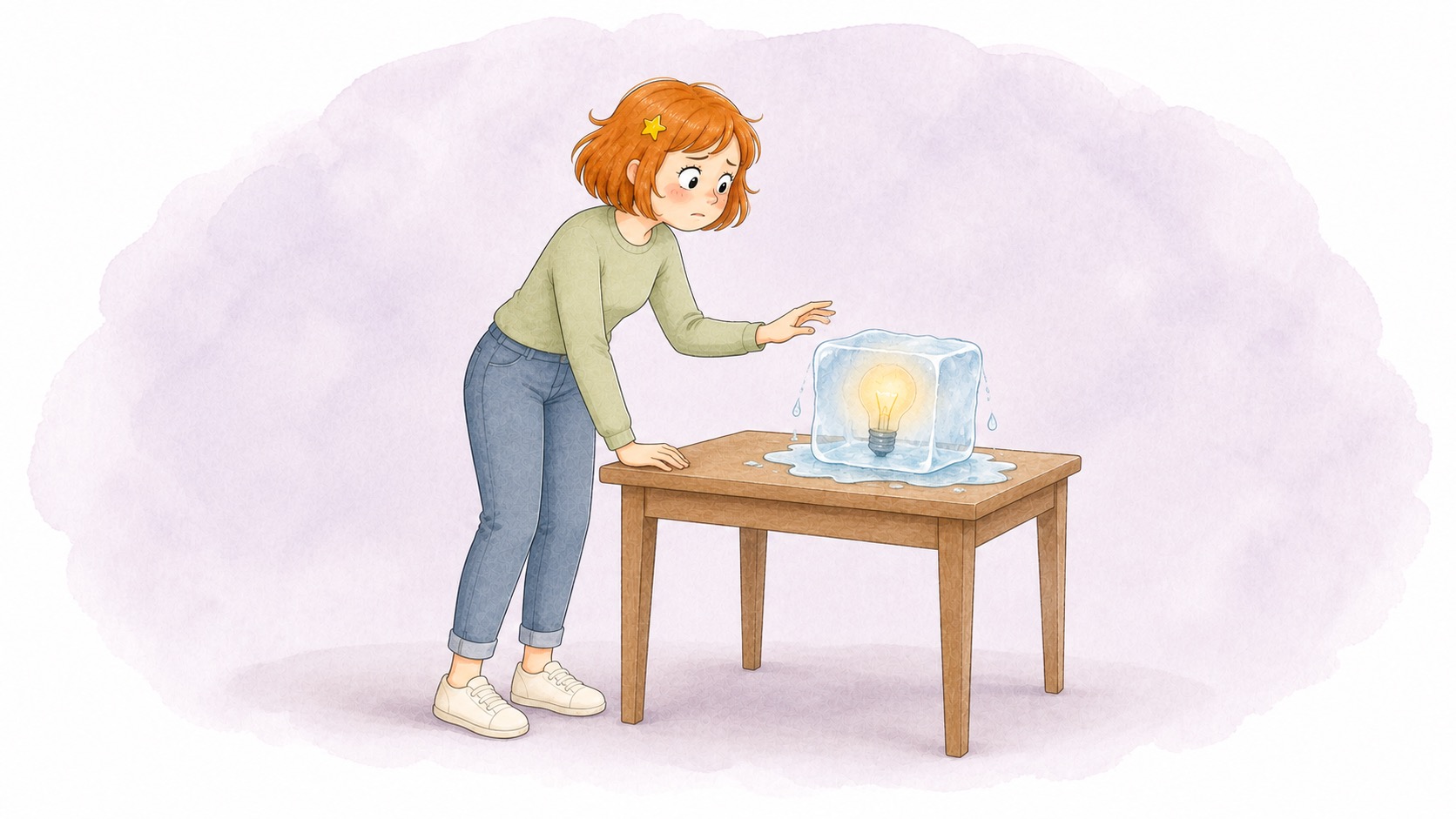
I have a folder of ideas in my notes. Thirty-seven of them. Every one felt great the moment I wrote it down. Some are a year old or more. Reading them back now, some just produce a faint "yeah, that would've been nice, I guess." I can't remember why I wanted them.
This isn't about bad memory. It's about how motivation works, and why ideas die while you wait.
Motivation Doesn't Arrive Before Action
The classic model: motivation first, then action. Get fired up first, then work.
And it's wrong.
Tom Baccigaluppi studied procrastination in college students. The single biggest predictor that someone would never start a task was waiting for the right mood. Motivation was supposed to arrive on its own. It doesn't.
The reverse works too. Robert Weinberg showed in experiments that people who started acting before they "felt ready" reached flow faster. Motivation came after the start, not before.
It's like a shower: you can wait until you feel like it, or turn it cold for thirty seconds and sort it out after.
An Idea Doesn't Die Because You're Lazy
The context fades.
An idea for an article that came in November was tied to November. To the situation back then. To the person you were then. If you didn't start in November, half a year later the context has changed. You've changed. The idea isn't quite yours anymore.
Enthusiasm has an expiration date too. The first week after an idea is peak energy. Then it fades. Not because you changed your mind. Just because the novelty wears off and there's no replacement yet.
Thomas Newman, who writes about creative projects, calls this the "sliding window of opportunity." The window stays open for a while. Then it closes. You can sit by the window and wait for it to open again. Will it?
What Actually Happens to Motivation
Motivation at the moment you come up with something isn't a green light. It's excitement. Anticipation. The brain doesn't yet know it'll be hard, so it releases dopamine as if the result were close.
Two weeks later the excitement drops. There was no real work, no reinforcement, no dopamine. And now you don't want it. Not because the goal is bad. Just because the brain sees no progress.
Start, even badly, even just formally, and the picture changes. The first small action creates minimal progress. The brain gets a grain of reinforcement. It wants a second. This isn't magic. It's physiology.
Drew Austin wrote about this in the context of his own projects: "motivation follows action, not the other way around." Without action, motivation evaporates. It's not an opinion, it's a pattern that reproduces with surprising stability.
Four Ways to Stop Waiting
First: take the first action before you sort out your feelings. Don't wait for inspiration. Sit down, open the document, write one sentence. Twenty minutes in you might still feel off. But you have a start.
Second: accept that the first step is unpleasant, and that's normal. Not because you're not ready. Starting anything requires the shift from "thinking about" to "doing." That's a discomfort zone. Not a signal to stop, just the price of admission.
Third: work on the idea while it's hot. If you wrote something down in the evening and still want it in the morning, grab it and go. Waiting "until there's time" means waiting until the idea stops feeling important.
Fourth: understand you don't have to want it. Motivation isn't a contract. You didn't sign up to feel enthusiastic every second. You can do the thing you "don't feel like," and the desire returns in the process. It almost always does.
What to Do
If you have an idea you've been carrying for over a month, ask yourself: am I waiting for motivation, or waiting for it to get easier?
It won't get easier. The context won't get better. You won't get less busy.
An idea that dies in your notes doesn't come back. Sometimes, yes, a new version arrives, a new attempt. But that's a different idea. The one that was, stayed in that context.
Not because you're bad at this. Because motivation isn't something that arrives. It's something action creates.
ForgeSelf can only help after you've started. Before that, any notebook will do.
Sources: Tom Baccigaluppi, University of Chicago, procrastination and readiness research, 2020. Robert Weinberg, sports psychology, pre-start state and performance, 2019. Drew Austin, "Motivation follows action," notes on perfectionism and starting projects, 2021. Thomas Newman, "The Sliding Window of Opportunity," 2018.
Content is created with AI based on scientific papers on hand-picked topics. I would be glad to get help from a human editor — send your CV to support@forgeself.com