The First Step Rule: What to Do in the First 24 Hours After an Idea Appears
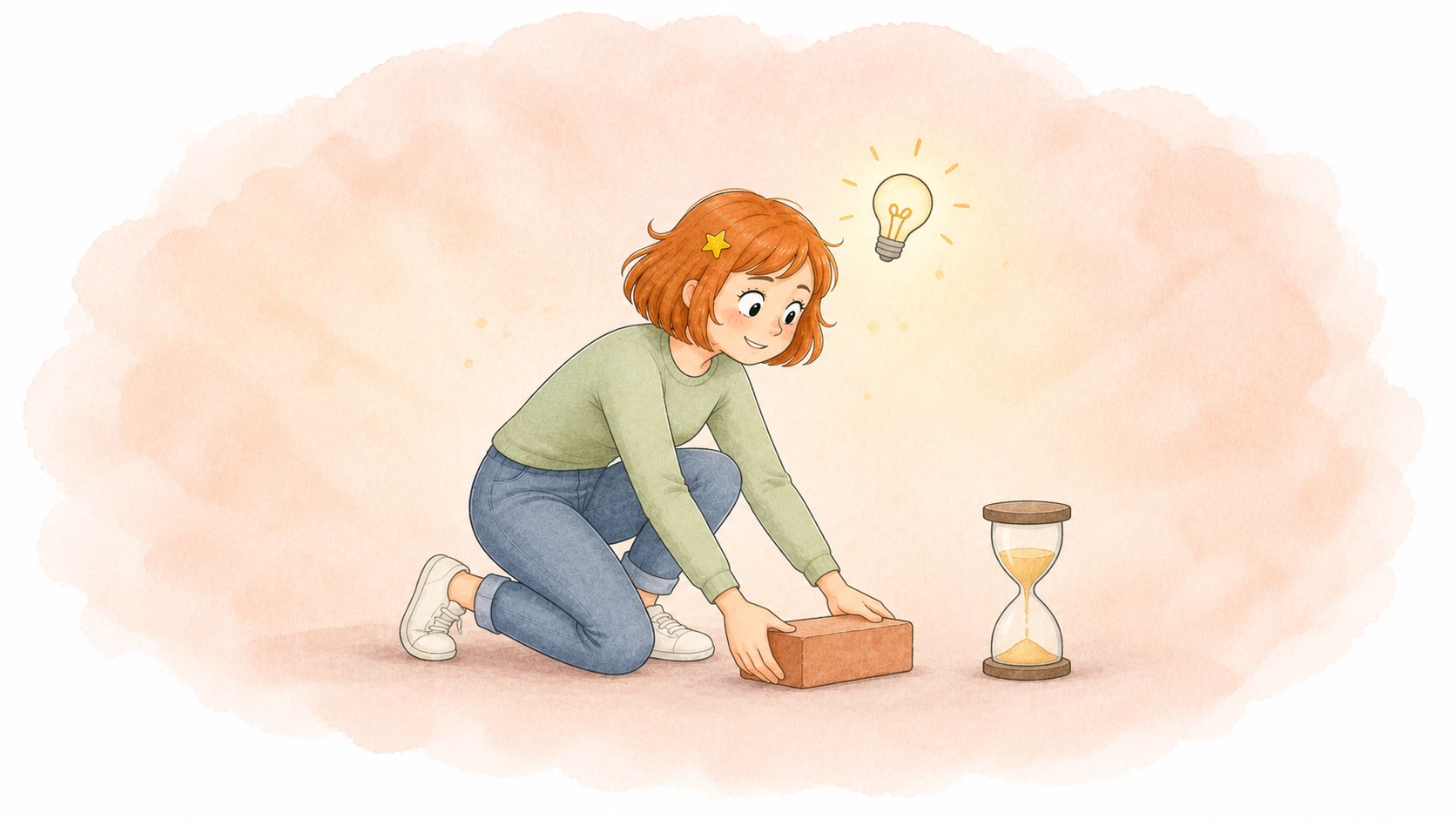
You have an idea. Something clicked, a feeling appeared — this is it, worth doing. You even wrote it down. Three days later you can't remember what exactly you wrote.
This isn't about willpower. It's that ideas without action lose their shape within a week. The nervous system doesn't hold onto them for long.
1. Why an Idea Lives Exactly One Day
I had a project once. Well, "had" — here's the story: Monday evening I figured out how to redo the interface. Tuesday morning I remembered the gist. Wednesday, something vague. Thursday, the name. Friday, that there was some project.
An idea with no external holder disappears. Not because it's bad. Because the brain can't keep more than a few big intentions active at once.
Here's the main point: an idea doesn't wait. It either lands on paper, on a screen, in a task — or it evaporates.
2. What to Do in the First Day
Don't do all the work. But don't just write down the title either.
Here's the minimum set for 24 hours:
One sentence — why you need it. Not a description, the why. Not "I'll build a cool site," but "I want to know if this is interesting to people beyond my friends." The why separates an idea from a fantasy.
One first action — concrete, 15-30 minutes. Not "start the project," but "write the first email," "launch the survey," "sketch three screens." Three screens isn't design, just a way to see what it would look like.
A deadline — not "someday," but "this Tuesday" or "by the end of the week." Without a date, an idea doesn't become a project.
No extra requirements. No spec, no business plan, no picking a tech stack. Just three things: why, the first step, the deadline.
3. What Kills an Idea in the First Day
Three ways to wreck an idea while it's still warm.
First: trying to do too much at once. "Since I started, I should finish today." That's a path to burnout at zero. The first step should be so small you can't not do it.
Second: hunting for the perfect moment. Monday isn't the best day. After vacation, no. Just do it, without waiting.
Third: putting off the note. "I'll remember." You won't. Write it down right away, while the idea is hot.
4. The First Step as a Filter
Not every idea deserves to live. The first 24 hours aren't just about starting, they're about filtering.
If you can't articulate the why in the first day, maybe it's not an idea, just irritation. If you can't come up with a first action, maybe the problem isn't that real. If setting a deadline scares you, you're not ready.
That's fine. Most ideas don't make it. Better to learn that in two days than in two months.
What to Do
I don't want this to sound like another list of tips. But here's what actually works.
When an idea shows up, open a note and write three lines. Why. First action. Deadline. Five minutes, no more. That's all you need on day one.
Then close the note and go about your day. The first action shouldn't be big. It should be real.
ForgeSelf collects ideas and turns them into tasks. But the most important part — the first step — you still do by hand.
Sources: Bluma Zeigarnik, Zeigarnik effect, 1927. David Allen, "Getting Things Done," 2001, on external storage systems.
Content is created with AI based on scientific papers on hand-picked topics. I would be glad to get help from a human editor — send your CV to support@forgeself.com