The 90-Second Rule for Riding Out an Emotional Wave
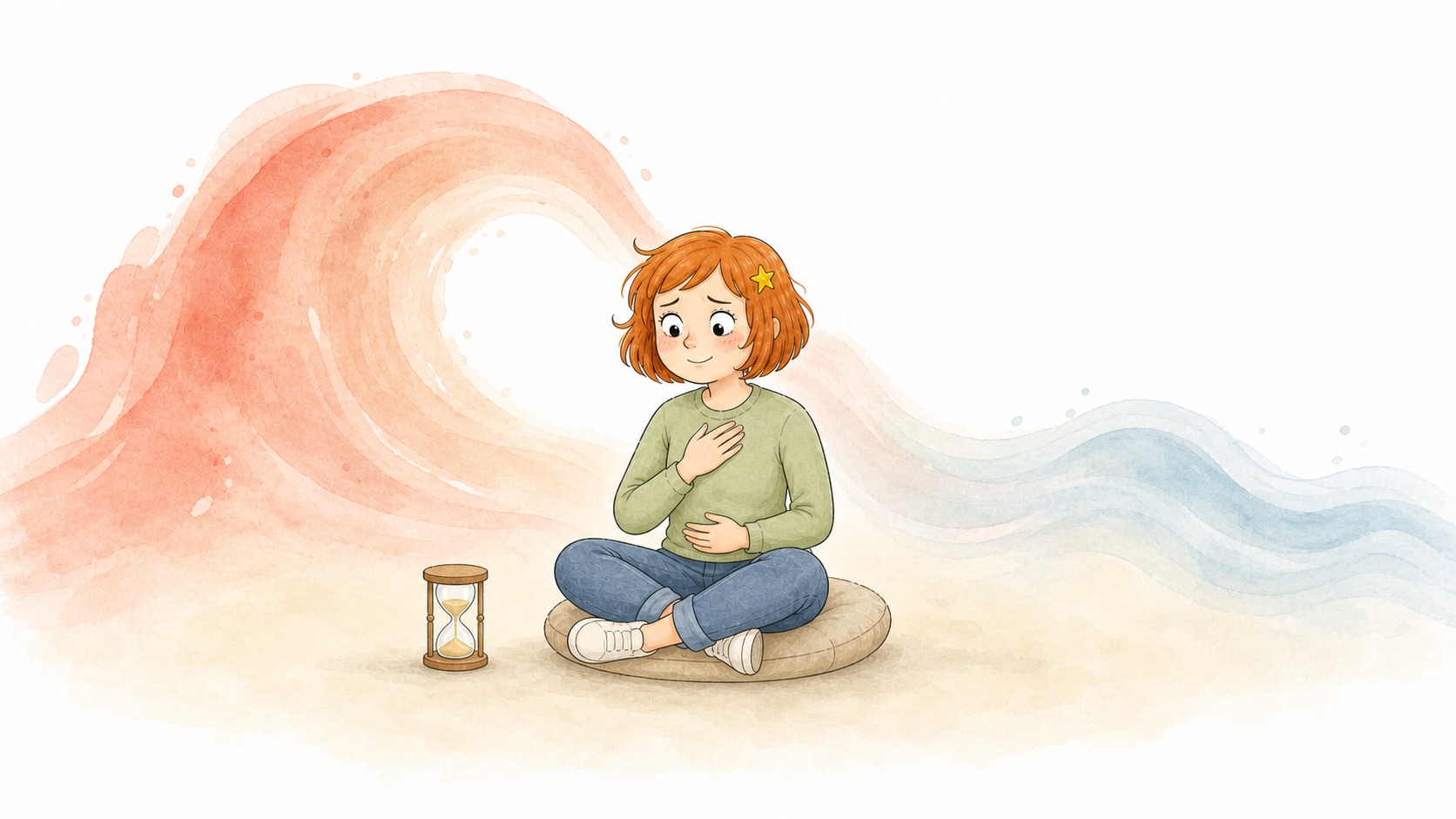
An emotion hits. Heart, breath, the whole body. You either react, or 90 seconds later it recedes. Physiologically. That's all it takes.
Most of us keep holding on instead.
1. An Emotion Lasts 90 Seconds, Then It's About Thoughts
Jill Bolte Taylor, a neuroanatomist and author of "My Stroke of Insight," described a key observation: an emotional reaction as a physical process lasts 60 to 90 seconds. Then the hormones clear, the body settles. That's it.
If you still feel bad after 90 seconds, you're not feeling the emotion anymore. You're feeling a thought about it. Rumination. You're thinking: "How could they say that? Why me? What will everyone think?"
Rumination is a thought that feeds the emotion. It can last for hours.
2. Three Ways to Ride Out the Wave
First: wait it out. If you feel it coming, just watch. The body, the breath, the sensations. Don't fight, don't analyze, just look. After 90 seconds the peak drops. This only works if you stop thinking about the situation.
Second: a sensory anchor. Shift focus to the body. Press your feet into the floor. Pinch your arm. Look at four objects around you and name them out loud. It's called grounding. Physical contact with reality breaks the thought spiral.
Third: ask yourself, what thought is holding this? The emotion came for a reason. If it won't leave after 90 seconds, there's a thought feeding it. "He said that on purpose." "They don't respect me." "It always goes this way." One thought. Find it and ask: is this a fact or an interpretation?
3. Why This Is Hard
Because you want to act. Emotion demands a response: answer, show them, prove it. It feels like not answering means losing.
But most of the damage in relationships and decisions comes from reacting in the moment. Not from the emotion itself. From what you did while it lasted.
4. What to Do
When you feel the wave, tell yourself: "90 seconds. This is physiology. I'm just waiting."
Don't act during those 90 seconds. Don't reply, don't send the message, don't make decisions.
Afterwards, if you still want to answer, answer. But from awareness, not from the emotion.
ForgeSelf lets you mark emotional states and look at the patterns. When you see you get angry on Thursdays after meetings, that's not 90 seconds anymore. That's information.
Sources: Jill Bolte Taylor, Ph.D., "My Stroke of Insight," 2006. Mark Travers, Ph.D., Forbes, 2025. Emotion regulation research.
Content is created with AI based on scientific papers on hand-picked topics. I would be glad to get help from a human editor — send your CV to support@forgeself.com